
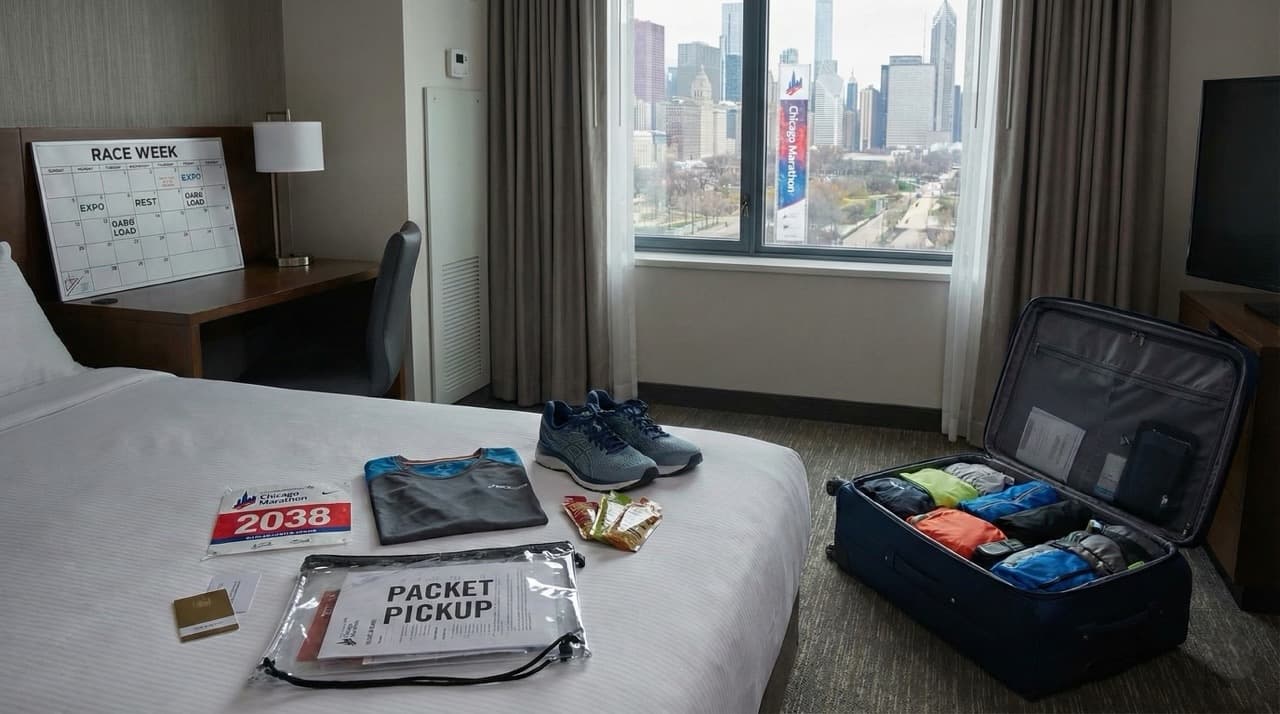
Race Week Logistics: Hotels, Packet Pickup & Peace of Mind
You've logged the miles. You've dialed in your nutrition. You've visualized crossing that finish line a hundred times. Then race week arrives, and suddenly you're scrambling to figure out where your hotel actually is in relation to the start line, whether you need cash for packet pickup, and if that 6 AM shuttle requires advance booking.
Race week logistics can derail months of preparation faster than a missed taper run. The difference between a confident toe line and a frazzled one often comes down to the unglamorous details: proximity to the start, backup alarm strategies, and knowing exactly where you need to be and when.
This guide covers the practical logistics that transform race week from chaotic to controlled.
Choosing Your Race Week Hotel: Location Trumps Amenities
The Instagram-worthy rooftop pool means nothing at 5 AM when you're calculating a 45-minute commute to the start line.
Distance to the start line determines everything. A hotel within walking distance (under one mile) eliminates transportation stress entirely. You control your timeline. You avoid crowded shuttles. You can return to your room after the race without waiting in line for an hour.
When walking distance isn't possible, prioritize hotels on direct shuttle routes. Most major marathons publish shuttle schedules 2-3 weeks before race day. Runner's World frequently covers race logistics for major events, but always verify details directly with race organizers.
Secondary considerations that actually matter:
- Blackout curtains: Poor sleep the night before racing drains performance more than skipping a single long run
- Mini fridge: Storing race morning breakfast and recovery drinks beats hoping for convenient options
- Early breakfast service: Many hotels offer pre-race breakfast starting at 5 AM for marathon weekends
- Parking costs: Factor this into your budget if driving; downtown marathon hotels often charge $30-50 per night
Book hotels 3-6 months in advance for major marathons. The best-located properties fill quickly, especially for Chicago, Boston, New York, and Berlin. Smaller regional races may offer more flexibility, but waiting until race week limits your options significantly.
Packet Pickup Strategy: Timing and What to Bring
Packet pickup isn't just grabbing your bib. It's the mandatory pre-race checkpoint that confirms your registration, provides essential race materials, and often serves as your only opportunity to visit the expo.
Most races require photo ID and either a confirmation email (printed or digital) or registration number. Some international races require your passport. Check the specific requirements on the race website at least one week before pickup opens.
Timing your pickup strategically reduces stress:
Early pickup (first day, morning): Shortest lines, full inventory of merchandise, relaxed atmosphere. The downside is making an extra trip if your hotel isn't near the expo location.
Mid-window pickup (Friday afternoon for Sunday races): Moderate crowds, most merchandise still available. This timing works well if you're arriving Friday and the expo is convenient to your hotel.
Late pickup (Saturday evening): Longest lines, potentially sold-out gear, rushed energy. Only choose this if absolutely necessary due to travel constraints.
Never assume you can pick up your packet race morning. The overwhelming majority of races close packet pickup the day before. Missing packet pickup means missing the race, regardless of your training.
What to examine at packet pickup:
- Verify your bib number matches your registration
- Confirm timing chip is attached (or collect it separately)
- Review start corral assignment
- Check bag check tags if applicable
- Read race day instructions immediately, not the night before
The race expo surrounding packet pickup deserves intentional navigation. Sample products you're curious about. Talk to brand representatives about gear questions. But avoid impulse purchases of untested products the day before racing. The new shoe model or revolutionary gel might work brilliantly, or it might cause problems you can't anticipate.
Transportation Logistics: Getting to the Start Line
Transportation failures create the worst race morning stress. Your Plan A needs a Plan B, and your Plan B needs a Plan C.
Walking: The gold standard if possible. No variables, no timing concerns, no crowds. Calculate the walk time and add 50% for race morning congestion.
Hotel shuttles: Confirm the schedule in writing at check-in. Ask what time the last shuttle departs, not what time it arrives at the start. Buffer 30-45 minutes for shuttle loading and potential delays.
Public transportation: Research exact routes and Sunday/holiday schedules, which often differ from weekday service. Major marathons like Chicago publish specific transit information. Download offline maps in case cell service is overwhelmed.
Rideshare (Uber/Lyft): Expensive during surge pricing (expect 3-4x normal rates) and unreliable due to road closures. If this is your only option, request your ride 90 minutes before your required arrival time.
Driving yourself: Only viable if the race offers participant parking near the start. Otherwise, you're creating a logistics nightmare trying to park in a city with closed roads and then navigating back to your car post-race.
The Night Before: Practical Preparation
Race morning begins the night before. Everything you'll need should be laid out, tested, and ready.
Pre-race checklist (actually write this down):
- Race bib pinned to singlet/shirt (practice pins; they're stiffer than you expect)
- Timing chip attached to shoe (test the strap tension)
- Fuel/gels in pockets or belt with tear-away tabs tested
- Running watch charged (screen OFF to save battery)
- Photo ID and hotel key card in secure pocket
- Throwaway warm-up layer for cold starts
- Sunglasses, hat, or visor if forecasted sunny
- Post-race meeting plan confirmed with supporters
Set multiple alarms. Your phone, a backup phone, the hotel wake-up call service. Dead phone batteries happen more often than you think.
Plan your race morning meal the night before. Eat what you've practiced during training, not what the hotel buffet recommends. Toast with peanut butter at 2 AM beats fancy hotel pancakes you've never tested.
Race Morning Timeline: Work Backward
Calculate your race morning timeline by working backward from the start time:
- Start time: 7:00 AM
- Arrive in corral: 6:30 AM (minimum)
- Clear security/bag check: 6:15 AM
- Final bathroom stop: 6:00 AM
- Arrive at start area: 5:45 AM
- Leave hotel: 5:00 AM
- Wake up: 4:00 AM
Add 15-30 minutes to each transition if you're running a major marathon with 30,000+ participants.
This seemingly excessive buffer time prevents the sprint to the start line that spikes your heart rate before mile 1. You cannot start a marathon too relaxed.
Post-Race Logistics: Planning Your Exit
Post-race logistics receive far less attention than pre-race planning, but matter significantly when you're exhausted and potentially injured.
Confirm the bag check process before race morning. Some races use numbered bins, others use checked bags with tags. Know where bag check is located in relation to the finish area. Walking an extra mile in compression socks after finishing sounds manageable until you're doing it.
Establish specific meeting points with supporters. "Near the finish" doesn't work in a crowd of 10,000 people. Use landmarks: "East side of the park, near the statue, at 11 AM." Build in 30-60 minute flexibility.
If you're using public transportation back to your hotel, research the return routes before race morning. Your brain won't function optimally post-marathon. The 42cal Race Directory provides comprehensive information about race logistics for marathons worldwide, including transportation and accommodation tips.
Plan a real meal for 2-4 hours post-race. Your body needs protein and carbohydrates, not just the free banana and bagel. Research restaurants near your hotel that don't require reservations and accommodate slow-moving, stiff-legged customers graciously.
The Mental Game of Logistics
Perfect logistics create mental space for performance. When you know exactly where to go, what to bring, and how long each step requires, your mind focuses on racing instead of worrying.
Write down your race day plan. Physical writing forces you to think through details that mental planning misses. Review it once before bed, then put it away. Trust your preparation.
Logistics failures happen despite perfect planning. Shuttles break down. Roads close unexpectedly. Weather changes everything. The runners who handle these disruptions best are the ones who've eliminated every controllable variable beforehand.
Your marathon time won't appear on your logistics planning document, but every minute you spend organizing the details is a minute you'll spend racing confidently instead of managing chaos.
Race week logistics aren't glamorous, but they're the foundation of great race day experiences. Handle them well, and you'll toe the line with one thing on your mind: running your best marathon.