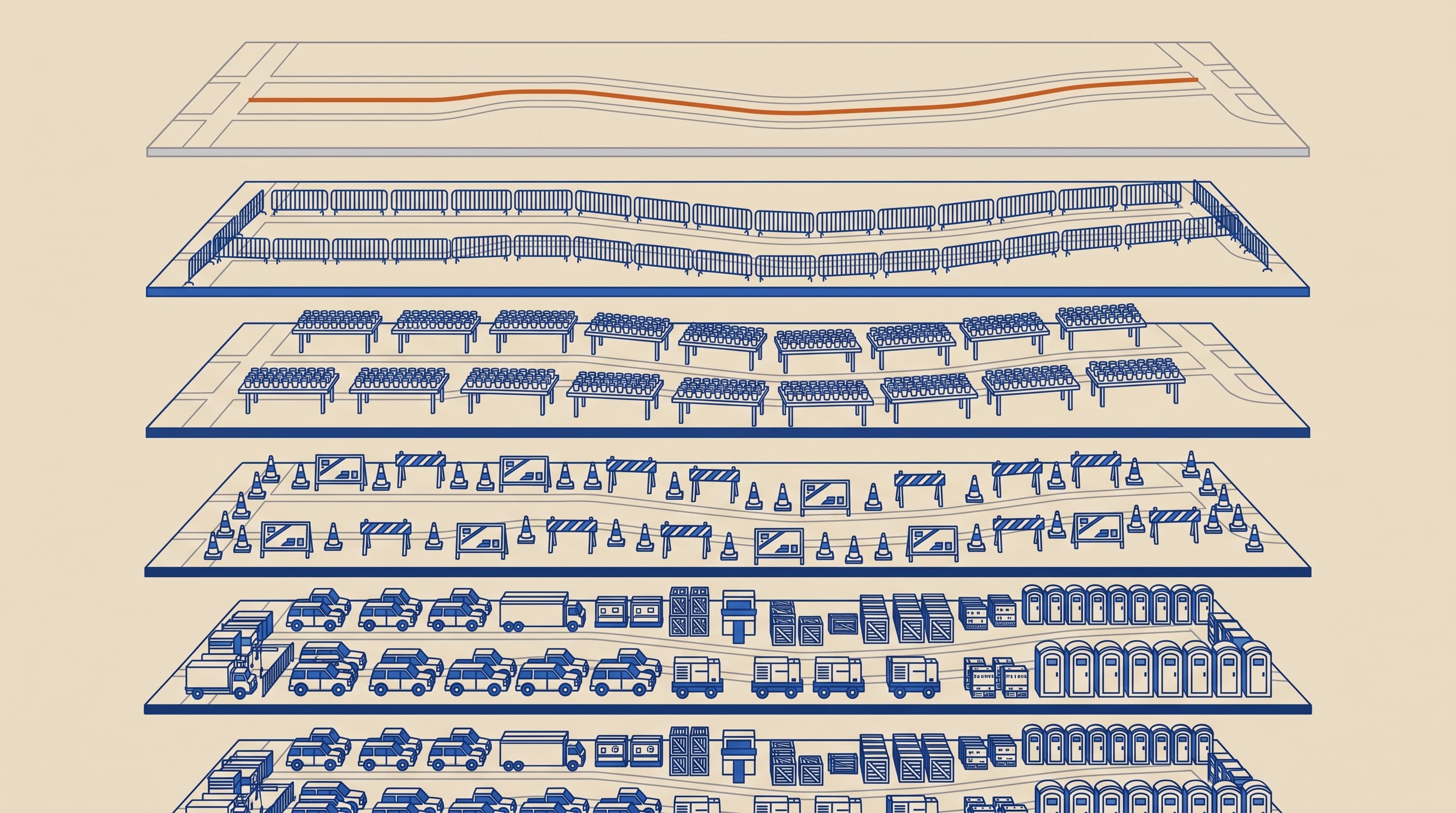
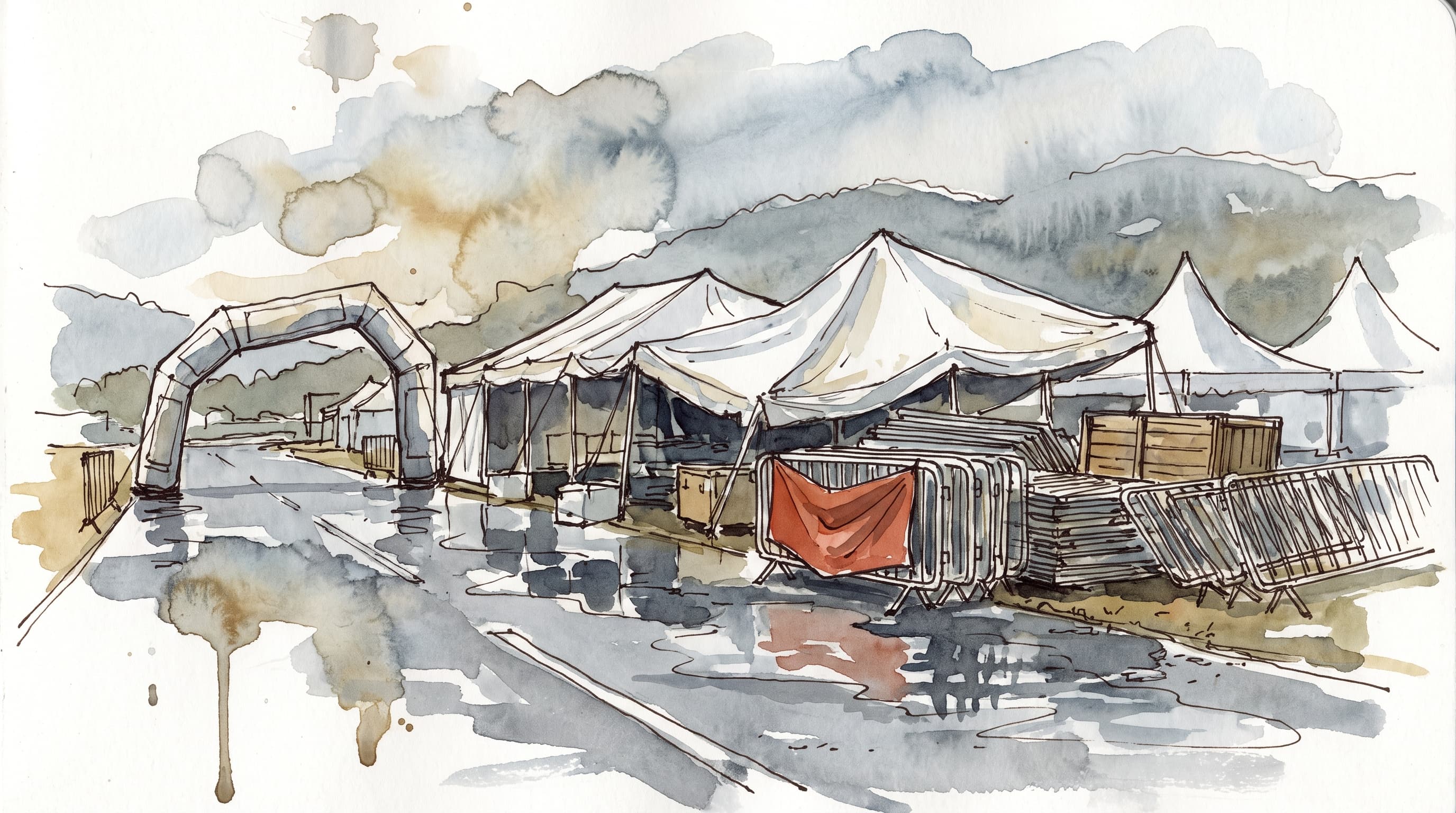
At 4:45 on the morning of 19 October 2025, the organisers of the Sanlam Cape Town Marathon called off the race. The start was an hour and a half away. Wind had torn through the race venue in Green Point overnight. Police said the infrastructure at the start and finish had been compromised. About 24,000 runners were told at 5am.
When a marathon is cancelled, the organiser makes the call with the city's police and medical teams. At Twin Cities the heat limit was written down in advance and checked against a forecast through the night. What runners get back ranges from nothing to a full refund. The entry terms set the starting point, although Twin Cities and Cape Town's sponsor both went beyond what was written. Three cancellations show how it works, from a storm two days out to a heat call less than two hours before the gun. A fourth race, Chicago in 2007, was stopped about three and a half hours in.
Cape Town kept its no-refunds rule
That morning the organiser said in a statement, "We regret that our no-refunds policy stands following the cancellation of the event this morning." It added, "Unfortunately, 2025 entries will not be carried over to 2026." Organiser Clark Gardner said the event was "devastated at the cancellation of our very special event."
The title sponsor Sanlam stepped in the same day. It offered every 2025 entrant "a free entry into the marathon in 2026 or 2027, depending on capacity constraints." Shadi Chauke announced it for the company.
The free place came from the sponsor rather than the race. Runners also did not pick the year. Capacity decided whether they ran in 2026 or 2027.
The terms have since changed. For the 2027 edition, Cape Town's FAQ says that if the event is cancelled, "all registered entrants will be entitled to a full refund of their entry fees." Runners do not have to ask, because refunds "will be processed proactively." The organiser still takes no responsibility for "any additional costs incurred by entrants." If the race is moved to a new date, entrants can transfer or take a full refund.
Who decides whether a marathon goes ahead?
The clearest inside account of a cancellation comes from the Twin Cities Marathon. Its organisers called off the 2023 race for heat and later presented their own minute-by-minute record to Running USA.
The rule was set in advance. The marathon and the 10 Mile would be cancelled "if WBGT is 69.0 or higher at the event start." WBGT is a heat-stress reading that takes humidity and sun into account as well as air temperature. The reading that counted was the one at the go/no-go time of 6:40am, before the first race of the day. The event meteorologist would average four permanent weather stations at Falcon Heights, Minneapolis, Camden and Fridley. Any station judged unreliable would be dropped.
The authority to apply the rule sat with the race. On the Friday, the race director held a call with the state patrol and St Paul police. The notes record "'our call' confirmed for lightning, heat." On the Saturday the city's medical partners were "still a 'go,' still our call." Police, the medical director and the National Weather Service advised. The organiser decided.
At 8:30pm on Saturday, the forecast for the start sat four degrees below the 69 limit. The National Weather Service called at 2:00am and again at 4:30am with no change. The race team met at 4:45am. The decision to cancel was made at 5:10am, and the email went out at 5:14am. The 10 Mile was due to start at 7:00am and the marathon at 8:00am.
The 69 figure was Twin Cities' own choice. The American College of Sports Medicine uses a flag scale for heat. A black flag means a WBGT above 82°F. The action it lists is "Cancel or recommend voluntary withdrawal." The ACSM deliberately avoided a strict cancellation standard so it would not tie a race director's hands. Twin Cities kept 82 as its black flag for conditions during the race. At the start line it drew the line 13 degrees lower.
Heat stopped the 2007 Chicago Marathon after it had started. The race began at 8am and was stopped by 11:30am. Forty-nine runners were taken to hospital. More than 300 were taken away by ambulance with nausea, heart palpitations and dizziness. One runner, Chad Schieber of Michigan, died. His death was later linked to complications of a mitral valve prolapse he had already been diagnosed with.
At Twin Cities, police and staff estimated that 20 to 25 percent of expected runners ran some part of the course anyway. Staff went out with cooling supplies on the final miles from noon until 2:30pm.
The organisers listed what they would change. "'Silent killers' (heat) require different protocols than obvious incidents (lightning)," they wrote. "Meeting 30 minutes earlier would've made a world of difference." They had been "100% ready for a 'red flag' race, but maybe only 95% ready for cancellation."
How Twin Cities paid back its runners
The first update to runners went out on 5 October. It offered no virtual race and no answer on refunds. On 20 October, nearly three weeks after race day, a second email confirmed full refunds for about 20,000 registrants.
The refund covered the registration fee and went back to the original card. Processing fees stayed with the race. The money came from three places. The first was the costs the race no longer had to pay once it was cancelled. The second was event cancellation insurance, which Twin Cities had carried since 2014. A claim was opened during race week and insurers confirmed a "large portion" of it. Board-approved cash reserves covered any shortfall. Runners were also guaranteed a place in 2024 at the 2023 price.
The organisers summed up the refund question in their own notes. "Have needed policies ('no refunds'), but be 'runner first' once possible ('full refunds!')." They also admitted the wait hurt. "March toward resolution of credit/refund was long and stressful," they wrote. "Delay opened door to doubts about restitution and TCM finances." The delay also brought out runners who said they did not want refunds. The next year's fields were 40 percent full before registration would normally open.
New York cancelled two days out
The 2012 New York City Marathon was cancelled in the aftermath of Hurricane Sandy. On Friday 2 November, two days before the race, Mayor Michael Bloomberg and NYRR's Mary Wittenberg issued a joint statement. "We would not want a cloud to hang over the race or its participants, and so we have decided to cancel it," they said. Here the mayor put his name to the decision alongside the race.
On 20 December, seven weeks later, NYRR offered three options. The first was a refund of the entry fee, minus an $11 processing fee. It applied only to runners who had not withdrawn before 24 October. The second was a guaranteed place in the 2013, 2014 or 2015 marathon. That place had to be paid for again, at the 2012 rate. The third was a place in the following March's NYC Half, with limited spots. Entry fees in 2012 had ranged from $216 to $347. "Our commitment is to work hard over the coming year to serve our runners and community," Wittenberg wrote.
What the entry terms promise
Cancellation terms vary more than runners expect. Two of the Majors take opposite approaches.
Tokyo pays on a schedule that depends on both the date and the reason. Its terms say fees "may be refunded and participants may have their entries deferred, depending on the timing of the decision and the reason for the cancellation." For the March 2027 race, a cancellation by 7 September 2026 refunds 70 percent. The refund falls to 50 percent by 7 December and to 20 percent by 7 February. Each of those tiers also comes with a deferred entry to 2028 or 2029. Handling fees come off every refund.
In the last month, a cancellation for snowstorm, flood, wind, lightning, tornado, fire, earthquake, a police request or a J-ALERT warning refunds 100 percent. In that case there is no deferral. A cancellation for any other reason in the same month refunds 10 percent, then 5 percent, then nothing. War, terrorism, disease and a non-police government request all fall in that second group. From 1 March to the 9:05am gun on 7 March, those runners get no money back and a deferred entry instead. The Japanese version of the terms prevails if the translations disagree. The Tokyo Marathon race page summarises the schedule.
Chicago works the other way. Its 2026 terms pay less the closer the race gets. A cancellation on or before 31 March 2026 brings "a 40% refund of their 2026 entry fee or a 50% discount on a deferred entry for the 2027 event." From April to June that drops to 20 percent or 30 percent off. From July to September it is 5 percent or 10 percent off. In the race window, 1 to 11 October, "all event fees (entry, ancillary products, etc.) are non-refundable, and will not be applied to future participation." Runners get a guaranteed 2027 entry, which they pay for in full. The tiers are also on the Chicago Marathon race page.
A late weather cancellation in Tokyo returns the full fee, less handling fees. A late cancellation in Chicago returns none of it. Other races rule out a refund for weather in so many words. In 42cal's summary of its terms, the Mo Cowbell Marathon keeps all entry fees after a weather-related cancellation. Kelowna Apple Marathon keeps them when it cancels for unsafe weather or air quality. Marquette Marathon gives no refund or race credit if weather or other conditions outside the organisers' control cancel, shorten or alter the race.
Does insurance cover a cancelled marathon?
The insurance that has paid for a cancellation belonged to the race. Twin Cities' event cancellation policy is the documented case of a refund funded partly by an insurer.
The cover sold to runners is written around the runner. Chicago charges an extra 17.024 percent of all items purchased, excluding event processing fees, for refundable registration. It pays a full refund if the runner "cannot participate due to a covered peril." The page does not say that a cancellation by the organiser counts as a covered peril.
Charity places sit under a second set of terms. The 2027 London terms from Coram, one charity partner, say that money from a runner who withdraws can be "non-refundable and treated as a donation." They contain no clause on what happens if the organiser cancels the race.
Further reading
- Cape Town Marathon cancelled, deemed unsafe due to wind (Daily Maverick): the 4:45am decision and the no-refunds statement.
- Sanlam to offer participants of the cancelled 2025 Cape Town Marathon free entry (EWN): the sponsor's same-day offer.
- Sanlam Cape Town Marathon FAQ: the 2027 full-refund terms.
- Twin Cities Marathon 2023 cancellation presentation (Running USA): the organiser's own timeline, heat rule and lessons.
- Twin Cities Marathon refunds runners (KSTP): what the refund covered and how it was funded.
- 2007 Chicago Marathon (Wikipedia): the race that was stopped by 11:30am.
- New York Marathon cancelled (World Athletics): the joint Bloomberg and Wittenberg statement.
- NYC Marathon runners can receive refund of entry fee (CBS New York): the three options offered in December 2012.
- NYC marathoners can get entry fee refund (Fox News/AP): the 2012 entry fee range.
- Tokyo Marathon 2027 participant guidelines: clause 17, the refund and deferral schedule.
- Chicago Marathon cancellation by you or by us: the 2026 tiers and refundable registration.
- ACSM heat guidelines (RRM): the WBGT flag scale.