
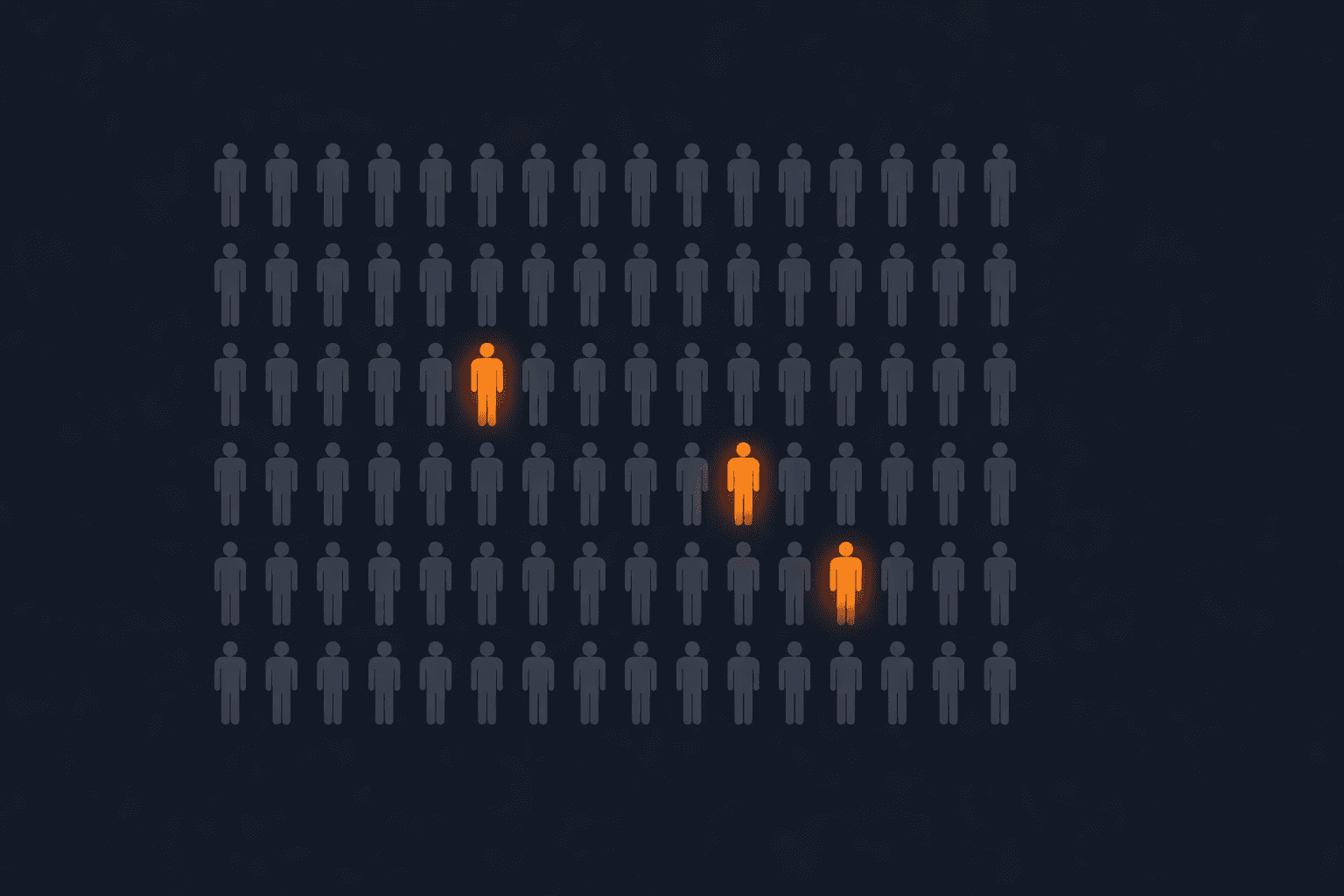
The sub-3 hour marathon sits at an odd intersection. It's one number. Three hours. And yet it separates roughly 97% of all marathon finishers from the other 3%. That gap is both smaller and larger than most runners think.
I spent the last month pulling data from the 2024 and 2025 racing seasons, across 286 marathons in 61 countries. The numbers tell a clearer story than most training plans ever will. If you're chasing a sub-3, or just curious about where you stand, this is everything the data says right now.
Key Takeaways
- Only 2.65% of all marathon finishers worldwide break 3 hours. For men, it's about 4%. For women, roughly 1%.
- Valencia has the highest sub-3 rate of any major marathon at 18.4%, nearly four times higher than Berlin's 5%.
- Peak age for running a sub-3 is 28-29, but the number of sub-3 finishers over 50 has doubled in the last decade.
- Most sub-3 runners peak at 55-70 miles per week during their heaviest training block.
- Carbon-plated shoes have improved running economy by 2-4%, and every world record from 5K to the marathon has fallen since their introduction in 2016.
- Sub-3 is now effectively the Boston qualifying standard for men under 35.
How Rare Is Sub-3?
Across all tracked marathons in 2025, 2.65% of finishers broke the 3-hour mark. That's roughly 33,000 to 39,000 performances globally per year, though some of those are repeat finishers logging multiple sub-3 results in a single season.
The gender split is stark. About 4% of male finishers and 1% of female finishers run sub-3. At the 2025 New York City Marathon, women posted a record-tying 203 sub-3 performances. That sounds impressive until you remember that over 50,000 people finished that race.
If you line up 100 marathon finishers at random, roughly two or three of them broke 3 hours. Rare enough to mean something. Common enough that it's not reserved for genetic outliers. Tens of thousands of regular people do it every year, and the gap between them and everyone else comes down to a few specific factors.
The Courses That Produce the Most Sub-3 Finishers
Not all marathons are equal. Course elevation, weather, and field composition create wildly different sub-3 rates across the world. Here's what the 2024 and 2025 seasons produced:
| Marathon | Sub-3 Rate | Sub-3 Finishers | Total Finishers |
|---|---|---|---|
| Valencia | 18.4% | ~5,600 | 30,523 |
| Boston | 12.5% | 5,082 | 40,705 |
| Gold Coast | 8.3% | ~650 | ~7,800 |
| Grandma's | 7.6% | 577 | ~7,600 |
| Milan | 7.6% | 500+ | ~6,600 |
| Chicago | 7.5% | ~3,356 | ~44,700 |
| Berlin | 5.0% | 2,382 | ~47,600 |
| New York City | 4.1% | 2,395 | ~58,400 |
| London | ~2.5% | ~1,200 | ~48,000 |
Valencia stands alone. Nearly one in five finishers there breaks 3 hours. The course is flat, the December weather cooperates, and the field self-selects for speed. Boston's 12.5% rate is partly a function of its qualifying standard, which filters out slower runners before they even register.
If you're picking a course specifically for a sub-3 attempt, net-downhill races deserve a look too. The REVEL marathon series features courses with over 5,000 feet of vertical descent, and Mountains 2 Beach in California drops 700+ feet over the final 22 miles. Both are USATF-certified and Boston-qualifying.
Training Benchmarks: What Sub-3 Runners Actually Do
The training volumes are less extreme than you might expect, but they're consistent. Most sub-3 runners peak at 55 to 70 miles per week during their heaviest training block, with a base of 40-50 miles per week established for at least six to eight weeks before the formal plan begins.
The pace math breaks down to 6:51 per mile, sustained for 26.2 miles. That's not fast in the way a 5K specialist thinks about fast. It's the kind of fast that demands patience, aerobic fitness, and the ability to hurt for a long time without slowing down.
Research on training intensity distribution has gotten more specific in recent years. A study published in Frontiers in Physiology found that a polarized approach (80% easy, 15% hard, 5% moderate) produced 30% greater marathon time improvements than a pyramidal approach in experienced runners. The same study found that newer runners responded better to pyramidal training (70% easy, 20% threshold, 10% hard). Your training age matters as much as your actual age.
Pace Predictors From Shorter Races
Your shorter race times can predict sub-3 readiness. These are rough benchmarks, not guarantees:
- 5K: Under 19:30 suggests strong sub-3 potential
- 10K: Under 40:00
- Half marathon: Under 1:27
If your 5K is around 22 minutes and you've never run a marathon, sub-3 is likely 2 to 4 years of consistent training away. Most runners who go from beginner to sub-3 take 4 to 6 years. Some do it in two. Some take ten. The variation says more about consistency than talent.
The Carbon Plate Factor
Every world record from 5K to the marathon has been broken since Nike introduced the Vaporfly 4% in 2016. That shoe name wasn't arbitrary. Research confirms a 2-4% improvement in running economy from carbon-plated super shoes, which translates to roughly 1-2% faster race times.
For a 3:05 marathoner, that 2% is about 3 minutes and 42 seconds. The difference between a 3:05 and a 2:58. The shoes pushed a real number of "almost there" runners across the line, even if they didn't create sub-3 ability from nothing.
At the 2025 NYC Marathon, the Nike Alphafly 3 was the most popular racing shoe on the course. ASICS Metaspeed models came in second. Both the men's and women's marathon world records were set in the Alphafly.
Age, Gender, and the Changing Demographics
The average peak age for a sub-3 marathon is 28-29, with 73% of sub-3 personal bests achieved between ages 25 and 34. But the more interesting story is happening at the margins.
Sub-3 finishers over age 50 have doubled in the last decade. In 2024, Jeff Mescal became the first person to complete 100 marathons under 3 hours at age 58. At the 2025 NYC Marathon, Boston-qualifying rates among runners in their 40s, 50s, and 60s all rose sharply compared to previous years.
Women's sub-3 performances are climbing too. The NYC Marathon recorded 203 women breaking 3 hours in 2025, tying the event record. The distance between men's and women's finishing times has narrowed steadily, and the data suggests it will keep narrowing as more women enter competitive marathon training at high volumes.
Sub-3 and Boston: The Numbers Are Converging
The Boston Athletic Association tightened qualifying standards again for 2026, cutting 5 minutes from every age group under 60. For men aged 18-34, the qualifying time is now 3:00:00. Sub-3 isn't just a personal milestone anymore. It's the entry ticket.
And even hitting the standard doesn't guarantee entry. The 2025 race required a 6:51 buffer below the qualifying time for acceptance. A male runner under 35 effectively needed a 2:53 to get in.
For runners over 40, the math is kinder but still tightening. A 45-year-old man needs a 3:15 to qualify, a 50-year-old woman needs a 3:55. The trend line only moves in one direction, and most competitive runners treat sub-3 as the benchmark that puts everything else within reach.
Where This Leaves You
Three hours is a number. It won't define you as a runner, and it won't make your next Tuesday morning run feel any different. But as benchmarks go, it's a useful one. The data tells you exactly what the target demands: consistent 55-70 mile weeks, years of patient base-building, the right course, and probably a pair of carbon plates on race day.
The runners who get there aren't superhuman. They're the ones who showed up on the days they didn't feel like it, for years, while paying attention to what worked and what didn't. If you're searching for your next target race, you can browse upcoming marathons on 42cal and filter by course profile, location, and date to find the one that fits your timeline.
And if sub-3 isn't your thing, that's fine too. The starting line doesn't care about your finish time. It only cares that you showed up.
Further Reading
- Sub-3 Marathon: Key Statistics and World Rankings
- How Rare Is a Sub-3 Marathon?
- Choosing the Right Marathon Course for a Sub-3 Attempt
- Effects of Pyramidal and Polarized Training on Marathon Performance
- Recent Improvements in Marathon Run Times Are Likely Technological, Not Physiological
- Age-Related Decline in Sub-3 Hour Marathon Runners
- Boston Marathon Qualifying Standards