
The Boston Athletic Association pays elite runners more to show up than it spends on public safety and medical services combined. Appearance fees for a handful of professional athletes at the Boston Marathon come to $1.9 million, against $0.81 million and $0.16 million on those two lines. Those figures come from the BAA's own Form 990, the tax return U.S. nonprofits file with the IRS each year.
What the entry fee funds
In the fiscal year that included the 2025 Boston Marathon, the BAA spent $36.4 million across every event and programme it runs. The Boston Marathon's own share of that, reported separately in the filing, was $25.8 million.
Spread across the race's 30,000 entrants, that comes to about $860 a runner, more than three times the $260 entry fee.
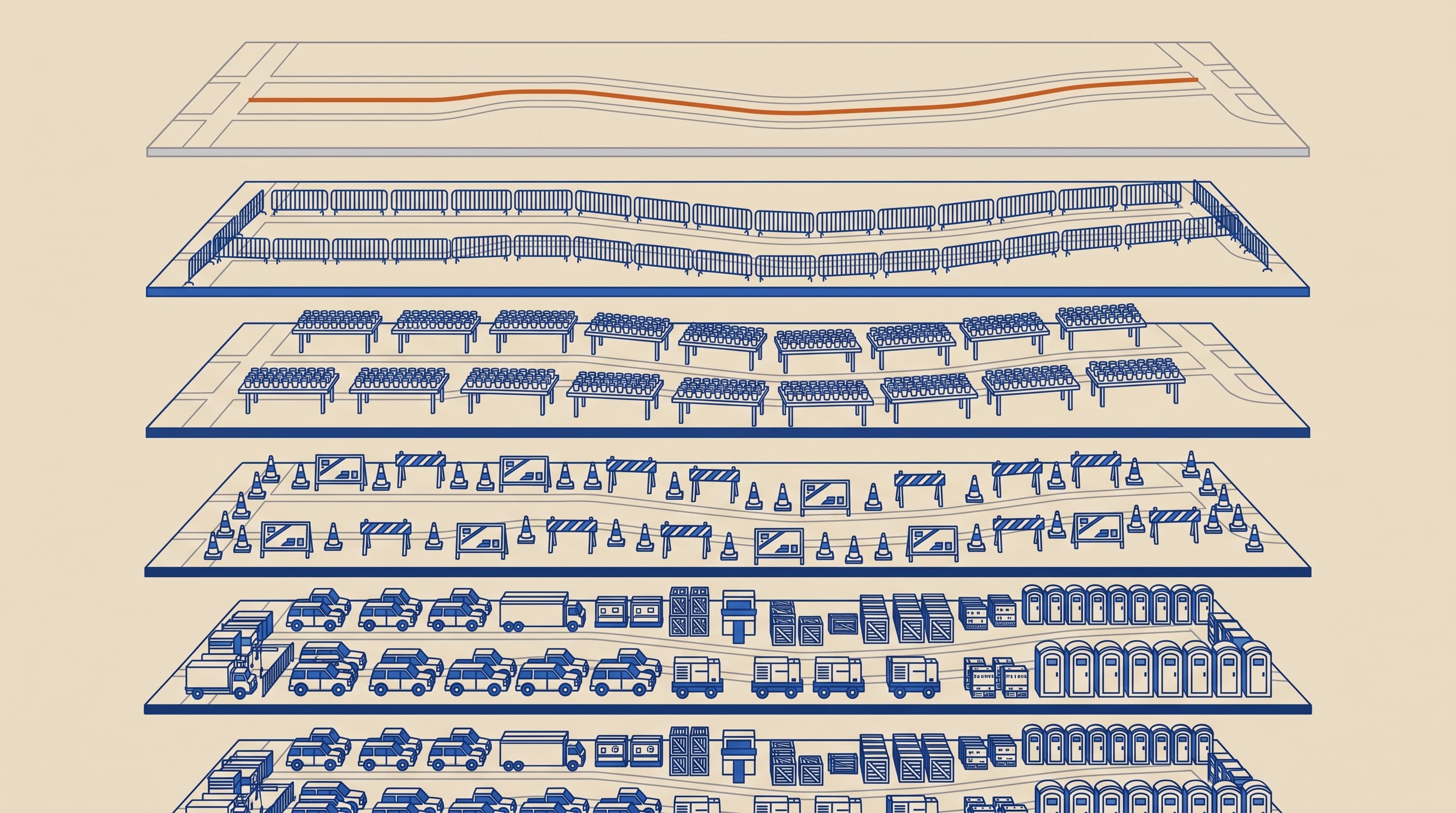
Salaries and benefits take the largest single slice of the association's budget, with outside services and equipment rental close behind. Equipment rental alone runs $4.6 million a year. Grants to governments and prize money sit further down the list. Contributed goods, the value of product that sponsors supply instead of cash, show up twice in the filing. The BAA books them once as an expense, and again as a donation on the revenue side.
Interstate Rental Service, a Boston vendor, was paid $2.1 million for race production. Running the race itself is also contracted out. DMSE Sports was paid $860,000 for the job. A staff of just 46 people oversees all of it.
The outside-services line splits into 14 named services elsewhere in the filing, broken out only because it passes a tenth of the BAA's total budget.
Prize money versus appearance money
Prize money goes only to whoever finishes fast enough to earn it. An appearance fee is paid just for entering, before the race even starts. A fast field draws attention on its own, and no race can count on getting one for free.
Prize money across all of the BAA's events comes to 3.9 percent of its budget, a rounding error next to salaries or equipment. Payouts continue down the finishing order and across the wheelchair, masters and para divisions. The winner's check in 2025 was $150,000, a record first prize for a World Marathon Major.
That $150,000 headline covers one race in one year. The tax filing's prize-money line, $1.4 million, covers every dollar the BAA paid out in prize money across every race it runs in a full fiscal year. Together with appearance fees, that comes to 9.2 percent of the BAA's entire budget.
John Fleming, the BAA's president, drew $387,450 in total compensation that same year, about a fifth of what elite athletes collect in appearance fees alone.
Appearance fees never make it into a press release the way prize money does. Boston.com published the purse in full, with a dollar figure for each place that pays out. The appearance-fee total becomes public only because federal tax law forces its disclosure, inside a line item large enough to require its own breakout on Schedule O. The BAA's return carried the same line, in the same place, the year before.
What the organizer pays the city
A marathon also pays its host city directly for the police and permits that come with running through public streets. New York Road Runners' tax filing names the payment outright. Nearly $1.6 million went to the city's Department of Finance for street permits and NYPD traffic fees. That was one of the five largest payments to outside contractors on the return; the year before, the same payment came to about $2.3 million.
NYRR pays for its own broadcast too. It paid a single production company, 45 Live Inc, $3.27 million just to produce the race broadcast. NYRR's entire royalties line for the year was $2.46 million, about three-quarters of that production bill.
Boston sends its payments straight to the towns along the course, instead of one city agency. The largest checks go to the City of Boston and the Commonwealth of Massachusetts. Smaller ones go to Hopkinton, where the race starts, and Newton, home to the course's hardest hills, $158,600 each. Add in the separately reported cost of public safety, and Boston's government-facing spending runs just over $2.5 million, about 7 percent of the BAA's total budget.
A decade ago, Los Angeles billed its own marathon organizer roughly $440,000 for city services, and estimated its costs the following year at about $570,000. The money covered police personnel, street cleaning and fire-department medical aid, LAist reported at the time. Current figures are not public.
Chicago shows the limits of billing an organizer. In 2024, police overtime for special events cost the city $22.6 million. Block Club Chicago traced roughly a third of that to a handful of ticketed events, the Chicago Marathon, Lollapalooza and NASCAR.
A city ordinance requires Chicago to bill organizers once police staffing passes 12 shifts. Billing is the easy part. Chicago recovered less than $2 million of what it was owed, and only from Lollapalooza and the Chase Corporate Challenge.
Sponsors versus runners
The BAA, New York Road Runners, the Houston Marathon Committee and Grandma's Marathon in Duluth all file the same kind of tax return. At Boston, entry fees cover less than a third of total revenue; sponsorship and other contributions cover 63 percent. At Grandma's, the smallest race in the group by revenue, entry fees cover just under two-thirds instead, because sponsors barely show up on its books.
At Houston, sponsors cover about 28 percent of revenue; at Grandma's, closer to 14 percent. Runners cover whatever is left.
What a marathon entry costs
A marathon's price tag moves with its field size. 42cal's own database covers 478 marathons worldwide, 181 of them priced in U.S. dollars. The priciest tier a race sells before charity or VIP packages is called the top standard entry, and among the U.S.-dollar races, its median price is $135.
Most races do not charge one flat price for the whole field. Of the 478 marathons in the database, 292 sell more than one general-entry tier, and the cheapest of those tiers runs about half below the most expensive on average.
Boston's own entry fee is $260 for 2026, above that median. Before paying, a runner must clear a qualifying time for their age and gender, a standard checked by 42cal's Boston qualifier calculator.
Depending on membership and residency, New York charges as much as $358. Both fields hold about 55,000 runners, yet Chicago charges a flat $250.
The database's full range runs from about $45 at the cheapest marathon to more than $600 at the priciest, the San Francisco Marathon, which alone sells seven separate price tiers.
When the fee does not carry over
Boston's own athlete page states, in one clause, that entries are "non-refundable, non-transferable, and non-deferable," except through the association's pregnancy and postpartum policy.
New York Road Runners requires a runner who canceled a guaranteed entry to register again and pay the following year's fees in full, inside a set claim window. Chicago spells it out just as plainly. A canceled fee stays canceled. Pregnancy or postpartum status changes that picture, and so does a cancellation-insurance policy, which the biggest races all sell as a separate product. Boston calls its own version Registration Protection.
New York shows what non-refundability looks like from the applicant's side, before anyone is even accepted. Entering the 2026 drawing costs a non-refundable $11 processing fee on top of the entry fee itself.
More than 240,000 people applied for that drawing, and NYRR accepted roughly one in a hundred of the applicants without an already-guaranteed spot, the lowest acceptance rate in the race's history. Multiplying the applicant count by the processing fee puts the total at roughly $2.6 million, our own arithmetic rather than a number NYRR publishes.
Where the charity money goes
London documents the charity-place exchange more openly than any U.S. major. A UK charity buys its places from London Marathon Events in blocks called bonds, sold on multi-year terms with every place already spoken for through 2029. Those bonds come in two tiers: a Golden Bond carries four entries a year, a Silver Bond two. The price of one of those places rose to £400 plus VAT, up from £370. London Marathon Events states plainly that a charity entry belongs to the charity that bought it, whoever ends up running in it.
That charity system moves more money than the organizer itself ever sees. London's runners raised a record £87.3 million for charities in 2025. That is more than London Marathon Events turned over in the year to December 2024, £59.8 million.
Boston's partner organizations together raised $50.4 million in 2025, and each one sets its own fundraising minimum. Team Red Cross requires $15,000 per bib; Trinity Boston Connects, $10,000. Boston does not publish what it charges a charity for a single place.